
Offsite SEO is all the things that a business does outside of their website to help it rank higher in search results. While onsite SEO is more about fixing and improving things on the website itself, offsite SEO is more about building trust from other places online. This usually happens through links from other websites, which act like signals that your site is worth paying attention to.
Offsite SEO is mostly about reputation, if you think about it. The more your website gets mentioned or linked to by solid or well-known sources, the more search engines start to see it as reliable. That can change where your site shows up in results, sometimes more than people expect.
Understanding Backlinks
One of the biggest parts of offsite SEO is backlinks. Backlinks are just links from other websites that go to your site. Search engines use these to figure out if your site is trustworthy or not.
This idea comes from algorithms like PageRank, which look at how many links you have and where they’re coming from. Backlinks are usually compared to votes, and that comparison really works. If a bunch of good websites link to your content, it sends a signal that your content is helpful or at least worth looking at. Because of that, sites with stronger backlinks usually rank higher, but it’s not the only thing that matters.
Link Building Strategies
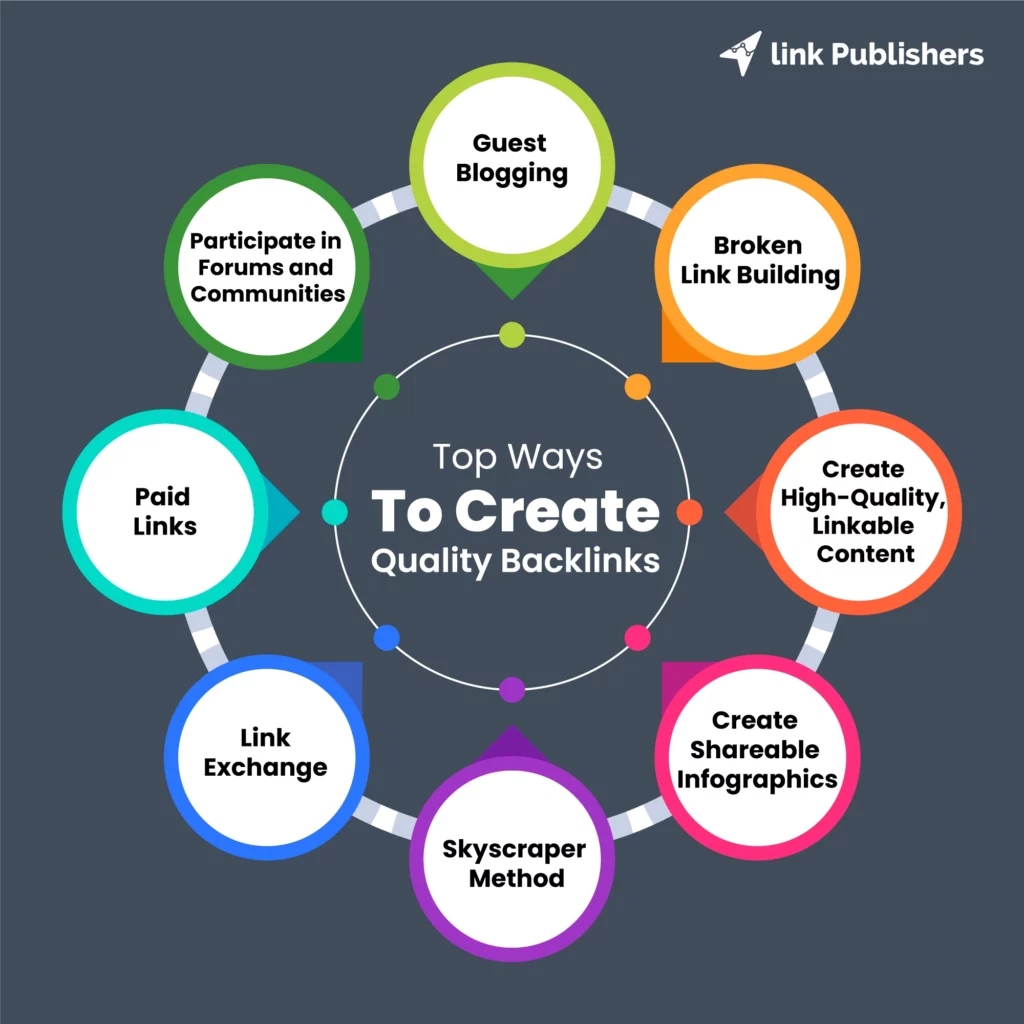
Link building is when you try to get backlinks from other websites, and it’s one of the main parts of offsite SEO. Even though links matter a lot, it’s better to focus on quality instead of just getting a lot of them. A few links from credible websites can do more than a bunch of links from sites that no one trusts.
Search engines are pretty good at catching spammy link-building tactics. If a site tries to cheat by buying links or using weird link networks, it can get penalized and that usually makes things worse instead of better. Because of that, the safer approach is to earn links naturally by putting out content people want to use or reference.
Social Media Engagement
Social media also plays a role in offsite SEO, even if it’s not directly related to rankings. Sharing content on platforms like Instagram, Twitter, or Facebook can help more people see it and maybe click through to your site.
When something gets shared a lot, it has a better chance of being noticed by other websites or writers. That can lead to backlinks over time without really forcing it. So even though social media links don’t directly boost rankings, they still help in an indirect way.
Guest Blogging
Guest blogging is another strategy people use for offsite SEO. It means writing content for other websites in your field. This can help you reach more people and build some level of credibility.
Most guest posts include a link back to your site, which helps with SEO and can bring in traffic too. To get real value from it, you have to pick websites that actually relate to what you’re writing about. If not, it kind of defeats the purpose.
Best Practices for Offsite SEO
There are a few ways to improve offsite SEO without running into problems.
Building real relationships with other website owners or content creators can help more than just randomly asking for links. Over time, it becomes easier to get better backlinks like this, even if it takes longer.
It’s also important to avoid things like buying links or joining link farms. These might look like shortcuts, but they can lead to penalties, and fixing that later can be a pain.
Another thing is focusing on content that people actually want to share. If something is useful, interesting, or even a little different, it has a better chance of getting linked without you having to push it too hard.
It also helps to check where your backlinks are coming from. Links from relevant and credible websites are way more valuable than random ones. Taking the time to look at that stuff can make your SEO better in the long run, even if it feels kind of repetitive.
Conclusion
In conclusion, offsite SEO is a big part of building a strong online presence. By getting quality backlinks, using social media, writing guest posts, and sticking to good practices, websites can build trust over time. When you do all of these things with solid onsite SEO, it can help increase visibility and bring in more traffic. It’s not always fast, but it does add up.
References
PageRank, Wikipedia https://en.wikipedia.org/wiki/PageRank
What is Off-Page SEO and Why It Matters, Search Engine Journal https://www.searchenginejournal.com/off-page-seo-guide/
Off-Page SEO Guide: Strategies to Improve Website Authority, HubSpot https://blog.hubspot.com/marketing/off-page-seo
Complete Guide to Link Building for SEO, Moz https://moz.com/learn/seo/link-building
Leave a Reply