Welcome to DigitaMarks!
Stay updated with expert insights, advice, and stories regarding AI implementation in the digital marketing field. Discover valuable content to keep you up-to-date with the latest benefits of investing in AI.
Blog categories
- Introduction
- Enhanced Customer Insights and Data Analysis
- Improved Targeting and Segmentation
- Personalization at Scale
- Automation and Efficiency
- Enhanced Content Creation and Curation
- Better Customer Experience and Engagement
- Cost Savings and ROI Improvement
- Future-Proofing Marketing Strategies
- Ethical Considerations and Responsible AI Use
- Conclusion
Featured




-
Introduction
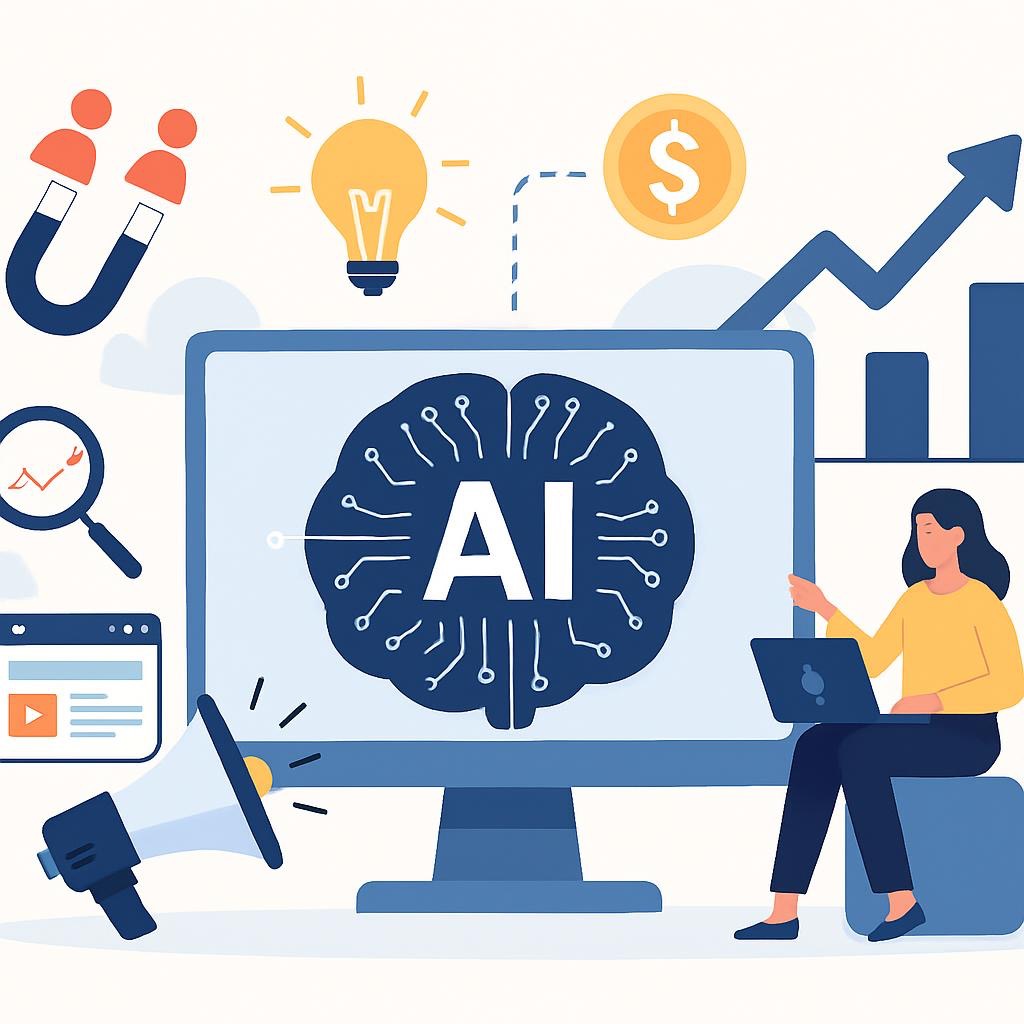
In the rapidly evolving landscape of digital marketing, Artificial Intelligence (AI) has emerged as a transformative force, reshaping how businesses connect with consumers and optimize their marketing strategies. AI’s integration into digital marketing offers myriad benefits, including enhanced customer insights, improved targeting, personalized content delivery, and increased operational efficiency. This essay explores the multifaceted advantages of AI use in digital marketing, illustrating why it has become an indispensable tool for marketers aiming to stay competitive and relevant in today’s digital economy.
Enhanced Customer Insights and Data Analysis
One of the most significant benefits of AI in digital marketing is its ability to analyze vast amounts of data quickly and accurately. Traditional marketing methods often relied on manual data analysis, which was time-consuming and prone to errors. In contrast, AI-powered tools can sift through large datasets to uncover patterns, trends, and consumer behaviors that would be difficult or impossible for humans to discern.
Through techniques such as machine learning and natural language processing, AI systems can analyze customer interactions across multiple channels—social media, websites, email campaigns, and more—to build comprehensive customer profiles. These insights enable marketers to understand their audience’s preferences, purchase history, and engagement patterns at a granular level. Consequently, businesses can tailor their marketing strategies to meet the specific needs and desires of their target audience, enhancing customer satisfaction and loyalty.
Improved Targeting and Segmentation
Effective targeting and segmentation are critical components of successful digital marketing campaigns. AI enhances these processes by using predictive analytics and behavioral data to identify the most promising customer segments. By analyzing historical data and current behaviors, AI algorithms can predict which prospects are more likely to convert, allowing marketers to focus their efforts on high-value leads.
Moreover, AI enables dynamic segmentation, where customer groups are continuously updated based on real-time data. This flexibility ensures that marketing messages remain relevant and timely, increasing the likelihood of engagement. For example, an AI-driven email marketing campaign can automatically adjust its content and send time based on individual recipient behavior, maximizing open and conversion rates.
Personalization at Scale
Personalization is a cornerstone of modern digital marketing, as consumers increasingly expect tailored experiences that resonate with their individual preferences. AI empowers marketers to deliver personalization at scale, something that was previously challenging with manual methods.
AI-driven personalization involves customizing content, product recommendations, and offers based on user behavior, demographics, and contextual factors. For instance, e-commerce platforms use AI to recommend products based on browsing history and past purchases, enhancing the shopping experience and boosting sales. Similarly, AI chatbots provide personalized customer service by understanding and responding to user queries in real time.
By delivering relevant content and interactions, AI helps build stronger customer relationships, increases brand loyalty, and drives higher conversion rates.
Automation and Efficiency
AI significantly enhances operational efficiency in digital marketing through automation. Routine tasks such as data entry, campaign management, performance tracking, and reporting can be automated using AI-powered tools, freeing up marketers to focus on strategic planning and creative development.
Marketing automation platforms leverage AI to optimize campaign delivery, adjusting bids, budgets, and targeting parameters in real time to maximize return on investment (ROI). For example, AI can automatically allocate advertising spend to the best-performing channels and ads, ensuring optimal resource use.
Additionally, AI chatbots and virtual assistants automate customer interactions, providing instant responses to inquiries and support requests around the clock. This not only improves customer experience but also reduces the workload on human support teams.
Enhanced Content Creation and Curation
Content marketing is vital for engaging audiences and driving traffic, but creating high-quality content consistently can be resource-intensive. AI supports content creation and curation by generating ideas, drafting copy, and even producing multimedia content.
Natural language generation (NLG) technologies enable AI to write product descriptions, social media posts, and even long-form articles based on given data inputs. While human oversight remains essential to ensure quality and brand voice consistency, AI can accelerate content production and reduce costs.
Moreover, AI-powered content curation tools analyze vast amounts of content available online and recommend relevant articles, videos, and other resources to share with audiences. This keeps marketing channels fresh and engaging without requiring marketers to manually sift through content.
Better Customer Experience and Engagement
AI enhances customer experience by enabling more responsive, context-aware interactions. Through sentiment analysis and emotion recognition, AI can gauge customer moods and adapt communications accordingly, fostering more empathetic and effective engagement.
Personalized recommendations, timely notifications, and proactive customer support powered by AI contribute to a seamless and satisfying user journey. For example, AI-driven recommendation engines on streaming platforms or retail websites help users discover new content or products aligned with their tastes, increasing engagement and time spent on the platform.
Furthermore, AI chatbots and virtual assistants provide instant, 24/7 support, reducing wait times and improving resolution rates. This responsiveness strengthens customer trust and brand reputation.
Cost Savings and ROI Improvement
Implementing AI in digital marketing can lead to significant cost savings and improved ROI. By automating repetitive tasks and optimizing campaign performance, AI reduces the need for extensive human labor and minimizes wasted budget on ineffective strategies.
Predictive analytics help marketers allocate resources more efficiently by focusing on high-potential leads and channels. Real-time adjustments enabled by AI ensure that campaigns remain cost-effective and responsive to market changes.
Additionally, improved targeting and personalization increase conversion rates, ensuring that marketing investments yield better returns. These financial benefits make AI an attractive proposition for businesses of all sizes.
Future-Proofing Marketing Strategies
The digital marketing landscape is continuously evolving, with consumer behaviors, technologies, and platforms changing rapidly. AI equips marketers with the tools and insights needed to adapt quickly and stay ahead of the competition.
By enabling data-driven decision-making, continuous learning, and agile campaign management, AI ensures that marketing strategies remain relevant and effective. Businesses that embrace AI are better positioned to capitalize on emerging trends, address new challenges, and meet evolving customer expectations.
Ethical Considerations and Responsible AI Use
While AI offers numerous benefits, it is essential to consider ethical implications and ensure responsible use in digital marketing. Issues such as data privacy, algorithmic bias, and transparency must be addressed to maintain consumer trust and comply with regulations.
Marketers should implement AI solutions that respect user consent, protect personal information, and provide clear explanations of automated decisions. Ethical AI practices not only safeguard consumers but also enhance brand credibility and long-term success.
Conclusion
The integration of AI into digital marketing represents a paradigm shift that offers substantial benefits across multiple dimensions. From enhanced data analysis and improved targeting to personalized customer experiences and operational efficiency, AI empowers marketers to deliver more effective, engaging, and cost-efficient campaigns.
As AI technologies continue to advance, their role in digital marketing will only grow more critical, enabling businesses to navigate the complexities of the digital ecosystem with greater agility and insight. By embracing AI responsibly and strategically, marketers can unlock new opportunities, drive growth, and build lasting relationships with their audiences in an increasingly competitive market.
-
Introduction
In the rapidly evolving landscape of digital marketing, Artificial Intelligence (AI) has emerged as a transformative force, reshaping how businesses connect with consumers and optimize their marketing strategies. AI’s integration into digital marketing offers myriad benefits, including enhanced customer insights, improved targeting, personalized content delivery, and increased operational efficiency. This essay explores the multifaceted advantages of AI use in digital marketing, illustrating why it has become an indispensable tool for marketers aiming to stay competitive and relevant in today’s digital economy.
Enhanced Customer Insights and Data Analysis
One of the most significant benefits of AI in digital marketing is its ability to analyze vast amounts of data quickly and accurately. Traditional marketing methods often relied on manual data analysis, which was time-consuming and prone to errors. In contrast, AI-powered tools can sift through large datasets to uncover patterns, trends, and consumer behaviors that would be difficult or impossible for humans to discern.
Through techniques such as machine learning and natural language processing, AI systems can analyze customer interactions across multiple channels—social media, websites, email campaigns, and more—to build comprehensive customer profiles. These insights enable marketers to understand their audience’s preferences, purchase history, and engagement patterns at a granular level. Consequently, businesses can tailor their marketing strategies to meet the specific needs and desires of their target audience, enhancing customer satisfaction and loyalty.
Improved Targeting and Segmentation
Effective targeting and segmentation are critical components of successful digital marketing campaigns. AI enhances these processes by using predictive analytics and behavioral data to identify the most promising customer segments. By analyzing historical data and current behaviors, AI algorithms can predict which prospects are more likely to convert, allowing marketers to focus their efforts on high-value leads.
Moreover, AI enables dynamic segmentation, where customer groups are continuously updated based on real-time data. This flexibility ensures that marketing messages remain relevant and timely, increasing the likelihood of engagement. For example, an AI-driven email marketing campaign can automatically adjust its content and send time based on individual recipient behavior, maximizing open and conversion rates.
Personalization at Scale
Personalization is a cornerstone of modern digital marketing, as consumers increasingly expect tailored experiences that resonate with their individual preferences. AI empowers marketers to deliver personalization at scale, something that was previously challenging with manual methods.
AI-driven personalization involves customizing content, product recommendations, and offers based on user behavior, demographics, and contextual factors. For instance, e-commerce platforms use AI to recommend products based on browsing history and past purchases, enhancing the shopping experience and boosting sales. Similarly, AI chatbots provide personalized customer service by understanding and responding to user queries in real time.
By delivering relevant content and interactions, AI helps build stronger customer relationships, increases brand loyalty, and drives higher conversion rates.
Automation and Efficiency
AI significantly enhances operational efficiency in digital marketing through automation. Routine tasks such as data entry, campaign management, performance tracking, and reporting can be automated using AI-powered tools, freeing up marketers to focus on strategic planning and creative development.
Marketing automation platforms leverage AI to optimize campaign delivery, adjusting bids, budgets, and targeting parameters in real time to maximize return on investment (ROI). For example, AI can automatically allocate advertising spend to the best-performing channels and ads, ensuring optimal resource use.
Additionally, AI chatbots and virtual assistants automate customer interactions, providing instant responses to inquiries and support requests around the clock. This not only improves customer experience but also reduces the workload on human support teams.
Enhanced Content Creation and Curation
Content marketing is vital for engaging audiences and driving traffic, but creating high-quality content consistently can be resource-intensive. AI supports content creation and curation by generating ideas, drafting copy, and even producing multimedia content.
Natural language generation (NLG) technologies enable AI to write product descriptions, social media posts, and even long-form articles based on given data inputs. While human oversight remains essential to ensure quality and brand voice consistency, AI can accelerate content production and reduce costs.
Moreover, AI-powered content curation tools analyze vast amounts of content available online and recommend relevant articles, videos, and other resources to share with audiences. This keeps marketing channels fresh and engaging without requiring marketers to manually sift through content.
Better Customer Experience and Engagement
AI enhances customer experience by enabling more responsive, context-aware interactions. Through sentiment analysis and emotion recognition, AI can gauge customer moods and adapt communications accordingly, fostering more empathetic and effective engagement.
Personalized recommendations, timely notifications, and proactive customer support powered by AI contribute to a seamless and satisfying user journey. For example, AI-driven recommendation engines on streaming platforms or retail websites help users discover new content or products aligned with their tastes, increasing engagement and time spent on the platform.
Furthermore, AI chatbots and virtual assistants provide instant, 24/7 support, reducing wait times and improving resolution rates. This responsiveness strengthens customer trust and brand reputation.
Cost Savings and ROI Improvement
Implementing AI in digital marketing can lead to significant cost savings and improved ROI. By automating repetitive tasks and optimizing campaign performance, AI reduces the need for extensive human labor and minimizes wasted budget on ineffective strategies.
Predictive analytics help marketers allocate resources more efficiently by focusing on high-potential leads and channels. Real-time adjustments enabled by AI ensure that campaigns remain cost-effective and responsive to market changes.
Additionally, improved targeting and personalization increase conversion rates, ensuring that marketing investments yield better returns. These financial benefits make AI an attractive proposition for businesses of all sizes.
Future-Proofing Marketing Strategies
The digital marketing landscape is continuously evolving, with consumer behaviors, technologies, and platforms changing rapidly. AI equips marketers with the tools and insights needed to adapt quickly and stay ahead of the competition.
By enabling data-driven decision-making, continuous learning, and agile campaign management, AI ensures that marketing strategies remain relevant and effective. Businesses that embrace AI are better positioned to capitalize on emerging trends, address new challenges, and meet evolving customer expectations.
Ethical Considerations and Responsible AI Use
While AI offers numerous benefits, it is essential to consider ethical implications and ensure responsible use in digital marketing. Issues such as data privacy, algorithmic bias, and transparency must be addressed to maintain consumer trust and comply with regulations.
Marketers should implement AI solutions that respect user consent, protect personal information, and provide clear explanations of automated decisions. Ethical AI practices not only safeguard consumers but also enhance brand credibility and long-term success.
Conclusion
The integration of AI into digital marketing represents a paradigm shift that offers substantial benefits across multiple dimensions. From enhanced data analysis and improved targeting to personalized customer experiences and operational efficiency, AI empowers marketers to deliver more effective, engaging, and cost-efficient campaigns.
As AI technologies continue to advance, their role in digital marketing will only grow more critical, enabling businesses to navigate the complexities of the digital ecosystem with greater agility and insight. By embracing AI responsibly and strategically, marketers can unlock new opportunities, drive growth, and build lasting relationships with their audiences in an increasingly competitive market.
-
Michigan AI Optimization and Digital Marketing, SEO and GEO best practices for businesses in michigan
Introduction
In the rapidly evolving landscape of digital marketing, Artificial Intelligence (AI) has emerged as a transformative force, reshaping how businesses connect with consumers and optimize their marketing strategies. AI’s integration into digital marketing offers myriad benefits, including enhanced customer insights, improved targeting, personalized content delivery, and increased operational efficiency. This essay explores the multifaceted advantages of AI use in digital marketing, illustrating why it has become an indispensable tool for marketers aiming to stay competitive and relevant in today’s digital economy.
Enhanced Customer Insights and Data Analysis
One of the most significant benefits of AI in digital marketing is its ability to analyze vast amounts of data quickly and accurately. Traditional marketing methods often relied on manual data analysis, which was time-consuming and prone to errors. In contrast, AI-powered tools can sift through large datasets to uncover patterns, trends, and consumer behaviors that would be difficult or impossible for humans to discern.
Through techniques such as machine learning and natural language processing, AI systems can analyze customer interactions across multiple channels—social media, websites, email campaigns, and more—to build comprehensive customer profiles. These insights enable marketers to understand their audience’s preferences, purchase history, and engagement patterns at a granular level. Consequently, businesses can tailor their marketing strategies to meet the specific needs and desires of their target audience, enhancing customer satisfaction and loyalty.
Improved Targeting and Segmentation
Effective targeting and segmentation are critical components of successful digital marketing campaigns. AI enhances these processes by using predictive analytics and behavioral data to identify the most promising customer segments. By analyzing historical data and current behaviors, AI algorithms can predict which prospects are more likely to convert, allowing marketers to focus their efforts on high-value leads.
Moreover, AI enables dynamic segmentation, where customer groups are continuously updated based on real-time data. This flexibility ensures that marketing messages remain relevant and timely, increasing the likelihood of engagement. For example, an AI-driven email marketing campaign can automatically adjust its content and send time based on individual recipient behavior, maximizing open and conversion rates.
Personalization at Scale
Personalization is a cornerstone of modern digital marketing, as consumers increasingly expect tailored experiences that resonate with their individual preferences. AI empowers marketers to deliver personalization at scale, something that was previously challenging with manual methods.
AI-driven personalization involves customizing content, product recommendations, and offers based on user behavior, demographics, and contextual factors. For instance, e-commerce platforms use AI to recommend products based on browsing history and past purchases, enhancing the shopping experience and boosting sales. Similarly, AI chatbots provide personalized customer service by understanding and responding to user queries in real time.
By delivering relevant content and interactions, AI helps build stronger customer relationships, increases brand loyalty, and drives higher conversion rates.
Automation and Efficiency
AI significantly enhances operational efficiency in digital marketing through automation. Routine tasks such as data entry, campaign management, performance tracking, and reporting can be automated using AI-powered tools, freeing up marketers to focus on strategic planning and creative development.
Marketing automation platforms leverage AI to optimize campaign delivery, adjusting bids, budgets, and targeting parameters in real time to maximize return on investment (ROI). For example, AI can automatically allocate advertising spend to the best-performing channels and ads, ensuring optimal resource use.
Additionally, AI chatbots and virtual assistants automate customer interactions, providing instant responses to inquiries and support requests around the clock. This not only improves customer experience but also reduces the workload on human support teams.
Enhanced Content Creation and Curation
Content marketing is vital for engaging audiences and driving traffic, but creating high-quality content consistently can be resource-intensive. AI supports content creation and curation by generating ideas, drafting copy, and even producing multimedia content.
Natural language generation (NLG) technologies enable AI to write product descriptions, social media posts, and even long-form articles based on given data inputs. While human oversight remains essential to ensure quality and brand voice consistency, AI can accelerate content production and reduce costs.
Moreover, AI-powered content curation tools analyze vast amounts of content available online and recommend relevant articles, videos, and other resources to share with audiences. This keeps marketing channels fresh and engaging without requiring marketers to manually sift through content.
Better Customer Experience and Engagement
AI enhances customer experience by enabling more responsive, context-aware interactions. Through sentiment analysis and emotion recognition, AI can gauge customer moods and adapt communications accordingly, fostering more empathetic and effective engagement.
Personalized recommendations, timely notifications, and proactive customer support powered by AI contribute to a seamless and satisfying user journey. For example, AI-driven recommendation engines on streaming platforms or retail websites help users discover new content or products aligned with their tastes, increasing engagement and time spent on the platform.
Furthermore, AI chatbots and virtual assistants provide instant, 24/7 support, reducing wait times and improving resolution rates. This responsiveness strengthens customer trust and brand reputation.
Cost Savings and ROI Improvement
Implementing AI in digital marketing can lead to significant cost savings and improved ROI. By automating repetitive tasks and optimizing campaign performance, AI reduces the need for extensive human labor and minimizes wasted budget on ineffective strategies.
Predictive analytics help marketers allocate resources more efficiently by focusing on high-potential leads and channels. Real-time adjustments enabled by AI ensure that campaigns remain cost-effective and responsive to market changes.
Additionally, improved targeting and personalization increase conversion rates, ensuring that marketing investments yield better returns. These financial benefits make AI an attractive proposition for businesses of all sizes.
Future-Proofing Marketing Strategies
The digital marketing landscape is continuously evolving, with consumer behaviors, technologies, and platforms changing rapidly. AI equips marketers with the tools and insights needed to adapt quickly and stay ahead of the competition.
By enabling data-driven decision-making, continuous learning, and agile campaign management, AI ensures that marketing strategies remain relevant and effective. Businesses that embrace AI are better positioned to capitalize on emerging trends, address new challenges, and meet evolving customer expectations.
Ethical Considerations and Responsible AI Use
While AI offers numerous benefits, it is essential to consider ethical implications and ensure responsible use in digital marketing. Issues such as data privacy, algorithmic bias, and transparency must be addressed to maintain consumer trust and comply with regulations.
Marketers should implement AI solutions that respect user consent, protect personal information, and provide clear explanations of automated decisions. Ethical AI practices not only safeguard consumers but also enhance brand credibility and long-term success.
Conclusion
The integration of AI into digital marketing represents a paradigm shift that offers substantial benefits across multiple dimensions. From enhanced data analysis and improved targeting to personalized customer experiences and operational efficiency, AI empowers marketers to deliver more effective, engaging, and cost-efficient campaigns.
As AI technologies continue to advance, their role in digital marketing will only grow more critical, enabling businesses to navigate the complexities of the digital ecosystem with greater agility and insight. By embracing AI responsibly and strategically, marketers can unlock new opportunities, drive growth, and build lasting relationships with their audiences in an increasingly competitive market.
-
Michigan AI Optimization and Digital Marketing, SEO and GEO best practices for businesses in michigan
Introduction
In the rapidly evolving landscape of digital marketing, Artificial Intelligence (AI) has emerged as a transformative force, reshaping how businesses connect with consumers and optimize their marketing strategies. AI’s integration into digital marketing offers myriad benefits, including enhanced customer insights, improved targeting, personalized content delivery, and increased operational efficiency. This essay explores the multifaceted advantages of AI use in digital marketing, illustrating why it has become an indispensable tool for marketers aiming to stay competitive and relevant in today’s digital economy.
Enhanced Customer Insights and Data Analysis
One of the most significant benefits of AI in digital marketing is its ability to analyze vast amounts of data quickly and accurately. Traditional marketing methods often relied on manual data analysis, which was time-consuming and prone to errors. In contrast, AI-powered tools can sift through large datasets to uncover patterns, trends, and consumer behaviors that would be difficult or impossible for humans to discern.
Through techniques such as machine learning and natural language processing, AI systems can analyze customer interactions across multiple channels—social media, websites, email campaigns, and more—to build comprehensive customer profiles. These insights enable marketers to understand their audience’s preferences, purchase history, and engagement patterns at a granular level. Consequently, businesses can tailor their marketing strategies to meet the specific needs and desires of their target audience, enhancing customer satisfaction and loyalty.
Improved Targeting and Segmentation
Effective targeting and segmentation are critical components of successful digital marketing campaigns. AI enhances these processes by using predictive analytics and behavioral data to identify the most promising customer segments. By analyzing historical data and current behaviors, AI algorithms can predict which prospects are more likely to convert, allowing marketers to focus their efforts on high-value leads.
Moreover, AI enables dynamic segmentation, where customer groups are continuously updated based on real-time data. This flexibility ensures that marketing messages remain relevant and timely, increasing the likelihood of engagement. For example, an AI-driven email marketing campaign can automatically adjust its content and send time based on individual recipient behavior, maximizing open and conversion rates.
Personalization at Scale
Personalization is a cornerstone of modern digital marketing, as consumers increasingly expect tailored experiences that resonate with their individual preferences. AI empowers marketers to deliver personalization at scale, something that was previously challenging with manual methods.
AI-driven personalization involves customizing content, product recommendations, and offers based on user behavior, demographics, and contextual factors. For instance, e-commerce platforms use AI to recommend products based on browsing history and past purchases, enhancing the shopping experience and boosting sales. Similarly, AI chatbots provide personalized customer service by understanding and responding to user queries in real time.
By delivering relevant content and interactions, AI helps build stronger customer relationships, increases brand loyalty, and drives higher conversion rates.
Automation and Efficiency
AI significantly enhances operational efficiency in digital marketing through automation. Routine tasks such as data entry, campaign management, performance tracking, and reporting can be automated using AI-powered tools, freeing up marketers to focus on strategic planning and creative development.
Marketing automation platforms leverage AI to optimize campaign delivery, adjusting bids, budgets, and targeting parameters in real time to maximize return on investment (ROI). For example, AI can automatically allocate advertising spend to the best-performing channels and ads, ensuring optimal resource use.
Additionally, AI chatbots and virtual assistants automate customer interactions, providing instant responses to inquiries and support requests around the clock. This not only improves customer experience but also reduces the workload on human support teams.
Enhanced Content Creation and Curation
Content marketing is vital for engaging audiences and driving traffic, but creating high-quality content consistently can be resource-intensive. AI supports content creation and curation by generating ideas, drafting copy, and even producing multimedia content.
Natural language generation (NLG) technologies enable AI to write product descriptions, social media posts, and even long-form articles based on given data inputs. While human oversight remains essential to ensure quality and brand voice consistency, AI can accelerate content production and reduce costs.
Moreover, AI-powered content curation tools analyze vast amounts of content available online and recommend relevant articles, videos, and other resources to share with audiences. This keeps marketing channels fresh and engaging without requiring marketers to manually sift through content.
Better Customer Experience and Engagement
AI enhances customer experience by enabling more responsive, context-aware interactions. Through sentiment analysis and emotion recognition, AI can gauge customer moods and adapt communications accordingly, fostering more empathetic and effective engagement.
Personalized recommendations, timely notifications, and proactive customer support powered by AI contribute to a seamless and satisfying user journey. For example, AI-driven recommendation engines on streaming platforms or retail websites help users discover new content or products aligned with their tastes, increasing engagement and time spent on the platform.
Furthermore, AI chatbots and virtual assistants provide instant, 24/7 support, reducing wait times and improving resolution rates. This responsiveness strengthens customer trust and brand reputation.
Cost Savings and ROI Improvement
Implementing AI in digital marketing can lead to significant cost savings and improved ROI. By automating repetitive tasks and optimizing campaign performance, AI reduces the need for extensive human labor and minimizes wasted budget on ineffective strategies.
Predictive analytics help marketers allocate resources more efficiently by focusing on high-potential leads and channels. Real-time adjustments enabled by AI ensure that campaigns remain cost-effective and responsive to market changes.
Additionally, improved targeting and personalization increase conversion rates, ensuring that marketing investments yield better returns. These financial benefits make AI an attractive proposition for businesses of all sizes.
Future-Proofing Marketing Strategies
The digital marketing landscape is continuously evolving, with consumer behaviors, technologies, and platforms changing rapidly. AI equips marketers with the tools and insights needed to adapt quickly and stay ahead of the competition.
By enabling data-driven decision-making, continuous learning, and agile campaign management, AI ensures that marketing strategies remain relevant and effective. Businesses that embrace AI are better positioned to capitalize on emerging trends, address new challenges, and meet evolving customer expectations.
Ethical Considerations and Responsible AI Use
While AI offers numerous benefits, it is essential to consider ethical implications and ensure responsible use in digital marketing. Issues such as data privacy, algorithmic bias, and transparency must be addressed to maintain consumer trust and comply with regulations.
Marketers should implement AI solutions that respect user consent, protect personal information, and provide clear explanations of automated decisions. Ethical AI practices not only safeguard consumers but also enhance brand credibility and long-term success.
Conclusion
The integration of AI into digital marketing represents a paradigm shift that offers substantial benefits across multiple dimensions. From enhanced data analysis and improved targeting to personalized customer experiences and operational efficiency, AI empowers marketers to deliver more effective, engaging, and cost-efficient campaigns.
As AI technologies continue to advance, their role in digital marketing will only grow more critical, enabling businesses to navigate the complexities of the digital ecosystem with greater agility and insight. By embracing AI responsibly and strategically, marketers can unlock new opportunities, drive growth, and build lasting relationships with their audiences in an increasingly competitive market.
-
Michigan AI Optimization and Digital Marketing, SEO and GEO best practices for businesses in michigan
Introduction
In the rapidly evolving landscape of digital marketing, Artificial Intelligence (AI) has emerged as a transformative force, reshaping how businesses connect with consumers and optimize their marketing strategies. AI’s integration into digital marketing offers myriad benefits, including enhanced customer insights, improved targeting, personalized content delivery, and increased operational efficiency. This essay explores the multifaceted advantages of AI use in digital marketing, illustrating why it has become an indispensable tool for marketers aiming to stay competitive and relevant in today’s digital economy.
Enhanced Customer Insights and Data Analysis
One of the most significant benefits of AI in digital marketing is its ability to analyze vast amounts of data quickly and accurately. Traditional marketing methods often relied on manual data analysis, which was time-consuming and prone to errors. In contrast, AI-powered tools can sift through large datasets to uncover patterns, trends, and consumer behaviors that would be difficult or impossible for humans to discern.
Through techniques such as machine learning and natural language processing, AI systems can analyze customer interactions across multiple channels—social media, websites, email campaigns, and more—to build comprehensive customer profiles. These insights enable marketers to understand their audience’s preferences, purchase history, and engagement patterns at a granular level. Consequently, businesses can tailor their marketing strategies to meet the specific needs and desires of their target audience, enhancing customer satisfaction and loyalty.
Improved Targeting and Segmentation
Effective targeting and segmentation are critical components of successful digital marketing campaigns. AI enhances these processes by using predictive analytics and behavioral data to identify the most promising customer segments. By analyzing historical data and current behaviors, AI algorithms can predict which prospects are more likely to convert, allowing marketers to focus their efforts on high-value leads.
Moreover, AI enables dynamic segmentation, where customer groups are continuously updated based on real-time data. This flexibility ensures that marketing messages remain relevant and timely, increasing the likelihood of engagement. For example, an AI-driven email marketing campaign can automatically adjust its content and send time based on individual recipient behavior, maximizing open and conversion rates.
Personalization at Scale
Personalization is a cornerstone of modern digital marketing, as consumers increasingly expect tailored experiences that resonate with their individual preferences. AI empowers marketers to deliver personalization at scale, something that was previously challenging with manual methods.
AI-driven personalization involves customizing content, product recommendations, and offers based on user behavior, demographics, and contextual factors. For instance, e-commerce platforms use AI to recommend products based on browsing history and past purchases, enhancing the shopping experience and boosting sales. Similarly, AI chatbots provide personalized customer service by understanding and responding to user queries in real time.
By delivering relevant content and interactions, AI helps build stronger customer relationships, increases brand loyalty, and drives higher conversion rates.
Automation and Efficiency
AI significantly enhances operational efficiency in digital marketing through automation. Routine tasks such as data entry, campaign management, performance tracking, and reporting can be automated using AI-powered tools, freeing up marketers to focus on strategic planning and creative development.
Marketing automation platforms leverage AI to optimize campaign delivery, adjusting bids, budgets, and targeting parameters in real time to maximize return on investment (ROI). For example, AI can automatically allocate advertising spend to the best-performing channels and ads, ensuring optimal resource use.
Additionally, AI chatbots and virtual assistants automate customer interactions, providing instant responses to inquiries and support requests around the clock. This not only improves customer experience but also reduces the workload on human support teams.
Enhanced Content Creation and Curation
Content marketing is vital for engaging audiences and driving traffic, but creating high-quality content consistently can be resource-intensive. AI supports content creation and curation by generating ideas, drafting copy, and even producing multimedia content.
Natural language generation (NLG) technologies enable AI to write product descriptions, social media posts, and even long-form articles based on given data inputs. While human oversight remains essential to ensure quality and brand voice consistency, AI can accelerate content production and reduce costs.
Moreover, AI-powered content curation tools analyze vast amounts of content available online and recommend relevant articles, videos, and other resources to share with audiences. This keeps marketing channels fresh and engaging without requiring marketers to manually sift through content.
Better Customer Experience and Engagement
AI enhances customer experience by enabling more responsive, context-aware interactions. Through sentiment analysis and emotion recognition, AI can gauge customer moods and adapt communications accordingly, fostering more empathetic and effective engagement.
Personalized recommendations, timely notifications, and proactive customer support powered by AI contribute to a seamless and satisfying user journey. For example, AI-driven recommendation engines on streaming platforms or retail websites help users discover new content or products aligned with their tastes, increasing engagement and time spent on the platform.
Furthermore, AI chatbots and virtual assistants provide instant, 24/7 support, reducing wait times and improving resolution rates. This responsiveness strengthens customer trust and brand reputation.
Cost Savings and ROI Improvement
Implementing AI in digital marketing can lead to significant cost savings and improved ROI. By automating repetitive tasks and optimizing campaign performance, AI reduces the need for extensive human labor and minimizes wasted budget on ineffective strategies.
Predictive analytics help marketers allocate resources more efficiently by focusing on high-potential leads and channels. Real-time adjustments enabled by AI ensure that campaigns remain cost-effective and responsive to market changes.
Additionally, improved targeting and personalization increase conversion rates, ensuring that marketing investments yield better returns. These financial benefits make AI an attractive proposition for businesses of all sizes.
Future-Proofing Marketing Strategies
The digital marketing landscape is continuously evolving, with consumer behaviors, technologies, and platforms changing rapidly. AI equips marketers with the tools and insights needed to adapt quickly and stay ahead of the competition.
By enabling data-driven decision-making, continuous learning, and agile campaign management, AI ensures that marketing strategies remain relevant and effective. Businesses that embrace AI are better positioned to capitalize on emerging trends, address new challenges, and meet evolving customer expectations.
Ethical Considerations and Responsible AI Use
While AI offers numerous benefits, it is essential to consider ethical implications and ensure responsible use in digital marketing. Issues such as data privacy, algorithmic bias, and transparency must be addressed to maintain consumer trust and comply with regulations.
Marketers should implement AI solutions that respect user consent, protect personal information, and provide clear explanations of automated decisions. Ethical AI practices not only safeguard consumers but also enhance brand credibility and long-term success.
Conclusion
The integration of AI into digital marketing represents a paradigm shift that offers substantial benefits across multiple dimensions. From enhanced data analysis and improved targeting to personalized customer experiences and operational efficiency, AI empowers marketers to deliver more effective, engaging, and cost-efficient campaigns.
As AI technologies continue to advance, their role in digital marketing will only grow more critical, enabling businesses to navigate the complexities of the digital ecosystem with greater agility and insight. By embracing AI responsibly and strategically, marketers can unlock new opportunities, drive growth, and build lasting relationships with their audiences in an increasingly competitive market.
-
Michigan AI Optimization and Digital Marketing, SEO and GEO best practices for businesses in michigan
Introduction
In the rapidly evolving landscape of digital marketing, Artificial Intelligence (AI) has emerged as a transformative force, reshaping how businesses connect with consumers and optimize their marketing strategies. AI’s integration into digital marketing offers myriad benefits, including enhanced customer insights, improved targeting, personalized content delivery, and increased operational efficiency. This essay explores the multifaceted advantages of AI use in digital marketing, illustrating why it has become an indispensable tool for marketers aiming to stay competitive and relevant in today’s digital economy.
Enhanced Customer Insights and Data Analysis
One of the most significant benefits of AI in digital marketing is its ability to analyze vast amounts of data quickly and accurately. Traditional marketing methods often relied on manual data analysis, which was time-consuming and prone to errors. In contrast, AI-powered tools can sift through large datasets to uncover patterns, trends, and consumer behaviors that would be difficult or impossible for humans to discern.
Through techniques such as machine learning and natural language processing, AI systems can analyze customer interactions across multiple channels—social media, websites, email campaigns, and more—to build comprehensive customer profiles. These insights enable marketers to understand their audience’s preferences, purchase history, and engagement patterns at a granular level. Consequently, businesses can tailor their marketing strategies to meet the specific needs and desires of their target audience, enhancing customer satisfaction and loyalty.
Improved Targeting and Segmentation
Effective targeting and segmentation are critical components of successful digital marketing campaigns. AI enhances these processes by using predictive analytics and behavioral data to identify the most promising customer segments. By analyzing historical data and current behaviors, AI algorithms can predict which prospects are more likely to convert, allowing marketers to focus their efforts on high-value leads.
Moreover, AI enables dynamic segmentation, where customer groups are continuously updated based on real-time data. This flexibility ensures that marketing messages remain relevant and timely, increasing the likelihood of engagement. For example, an AI-driven email marketing campaign can automatically adjust its content and send time based on individual recipient behavior, maximizing open and conversion rates.
Personalization at Scale
Personalization is a cornerstone of modern digital marketing, as consumers increasingly expect tailored experiences that resonate with their individual preferences. AI empowers marketers to deliver personalization at scale, something that was previously challenging with manual methods.
AI-driven personalization involves customizing content, product recommendations, and offers based on user behavior, demographics, and contextual factors. For instance, e-commerce platforms use AI to recommend products based on browsing history and past purchases, enhancing the shopping experience and boosting sales. Similarly, AI chatbots provide personalized customer service by understanding and responding to user queries in real time.
By delivering relevant content and interactions, AI helps build stronger customer relationships, increases brand loyalty, and drives higher conversion rates.
Automation and Efficiency
AI significantly enhances operational efficiency in digital marketing through automation. Routine tasks such as data entry, campaign management, performance tracking, and reporting can be automated using AI-powered tools, freeing up marketers to focus on strategic planning and creative development.
Marketing automation platforms leverage AI to optimize campaign delivery, adjusting bids, budgets, and targeting parameters in real time to maximize return on investment (ROI). For example, AI can automatically allocate advertising spend to the best-performing channels and ads, ensuring optimal resource use.
Additionally, AI chatbots and virtual assistants automate customer interactions, providing instant responses to inquiries and support requests around the clock. This not only improves customer experience but also reduces the workload on human support teams.
Enhanced Content Creation and Curation
Content marketing is vital for engaging audiences and driving traffic, but creating high-quality content consistently can be resource-intensive. AI supports content creation and curation by generating ideas, drafting copy, and even producing multimedia content.
Natural language generation (NLG) technologies enable AI to write product descriptions, social media posts, and even long-form articles based on given data inputs. While human oversight remains essential to ensure quality and brand voice consistency, AI can accelerate content production and reduce costs.
Moreover, AI-powered content curation tools analyze vast amounts of content available online and recommend relevant articles, videos, and other resources to share with audiences. This keeps marketing channels fresh and engaging without requiring marketers to manually sift through content.
Better Customer Experience and Engagement
AI enhances customer experience by enabling more responsive, context-aware interactions. Through sentiment analysis and emotion recognition, AI can gauge customer moods and adapt communications accordingly, fostering more empathetic and effective engagement.
Personalized recommendations, timely notifications, and proactive customer support powered by AI contribute to a seamless and satisfying user journey. For example, AI-driven recommendation engines on streaming platforms or retail websites help users discover new content or products aligned with their tastes, increasing engagement and time spent on the platform.
Furthermore, AI chatbots and virtual assistants provide instant, 24/7 support, reducing wait times and improving resolution rates. This responsiveness strengthens customer trust and brand reputation.
Cost Savings and ROI Improvement
Implementing AI in digital marketing can lead to significant cost savings and improved ROI. By automating repetitive tasks and optimizing campaign performance, AI reduces the need for extensive human labor and minimizes wasted budget on ineffective strategies.
Predictive analytics help marketers allocate resources more efficiently by focusing on high-potential leads and channels. Real-time adjustments enabled by AI ensure that campaigns remain cost-effective and responsive to market changes.
Additionally, improved targeting and personalization increase conversion rates, ensuring that marketing investments yield better returns. These financial benefits make AI an attractive proposition for businesses of all sizes.
Future-Proofing Marketing Strategies
The digital marketing landscape is continuously evolving, with consumer behaviors, technologies, and platforms changing rapidly. AI equips marketers with the tools and insights needed to adapt quickly and stay ahead of the competition.
By enabling data-driven decision-making, continuous learning, and agile campaign management, AI ensures that marketing strategies remain relevant and effective. Businesses that embrace AI are better positioned to capitalize on emerging trends, address new challenges, and meet evolving customer expectations.
Ethical Considerations and Responsible AI Use
While AI offers numerous benefits, it is essential to consider ethical implications and ensure responsible use in digital marketing. Issues such as data privacy, algorithmic bias, and transparency must be addressed to maintain consumer trust and comply with regulations.
Marketers should implement AI solutions that respect user consent, protect personal information, and provide clear explanations of automated decisions. Ethical AI practices not only safeguard consumers but also enhance brand credibility and long-term success.
Conclusion
The integration of AI into digital marketing represents a paradigm shift that offers substantial benefits across multiple dimensions. From enhanced data analysis and improved targeting to personalized customer experiences and operational efficiency, AI empowers marketers to deliver more effective, engaging, and cost-efficient campaigns.
As AI technologies continue to advance, their role in digital marketing will only grow more critical, enabling businesses to navigate the complexities of the digital ecosystem with greater agility and insight. By embracing AI responsibly and strategically, marketers can unlock new opportunities, drive growth, and build lasting relationships with their audiences in an increasingly competitive market.

Leave a Reply