
Search engine optimization (SEO) is a big part of digital marketing. One part that stands out is onsite SEO, which is also called on-page SEO. This focuses on improving your website so it can rank higher in search results. Unlike offsite SEO (which deals with things like backlinks), onsite SEO is more about what you can control directly on your own site. It can help bring more people to your website and make it easier to find on search engines like Google.
Onsite SEO makes your website easier to understand for both users and search engines. Search engines use bots to scan pages and try to figure out if the content actually answers what someone is searching for. If your site is organized, not confusing to use, and has useful information, it gives a signal that your page is relevant. That’s usually what helps it show up in search results, even though there are other factors too.
Content Optimization: The Heart of Onsite SEO
Content is the most important part of onsite SEO. You can have a really good looking website, but if the content isn’t helpful, it’s not going to do much. Content optimization is about including information that actually answers questions or helps solve a problem on the page. It should include keywords, but in a way that sounds normal and not repetitive.
Something I remember from class lecture is how search engines focus a lot on user intent. They aren’t just matching keywords anymore, they try to understand what the person is actually looking for. Because of that, content that clearly matches what users want (lime information, a certain page, or something to buy), has a better chance of ranking higher. It’s not always exact, but it definitely matters.
Title Tags and Meta Descriptions: First Impressions Matter
Title tags and meta descriptions are another part of onsite SEO. This is what people see first in search results, so they act like a first impression. They should explain what the page is about and include the main keyword, but still sound natural.
Meta descriptions are the short summaries under the title. They don’t actually change rankings, but they can affect whether someone clicks or not. If the description is clear and not confusing, people are more likely to click on it instead of skipping over it.
Using Headings to Structure Content
Headings like H1, H2, and H3 help organize content so it’s easier to read. The H1 is usually the main title, and the other headings break things into sections.
From a reader’s perspective, this helps a lot because most people don’t read everything word for word, they scan. Having headings makes it easier to find what they’re looking for instead of dealing with one big block of text. It also helps search engines understand the structure of the page. If people stay on your page longer because it’s easier to read, that can help your SEO too.
Internal Linking: Improving Navigation and SEO Value
Internal linking might not seem that important at first, but it actually is. It just means linking to other pages on your own website. This helps search engines understand how your pages connect and makes it easier for them to go through your site.
It also helps users find more information without leaving your site. For example, if someone is reading about SEO basics, you could link to another page about keyword research. That way they keep exploring instead of leaving right away. It’s a small thing but it adds up.
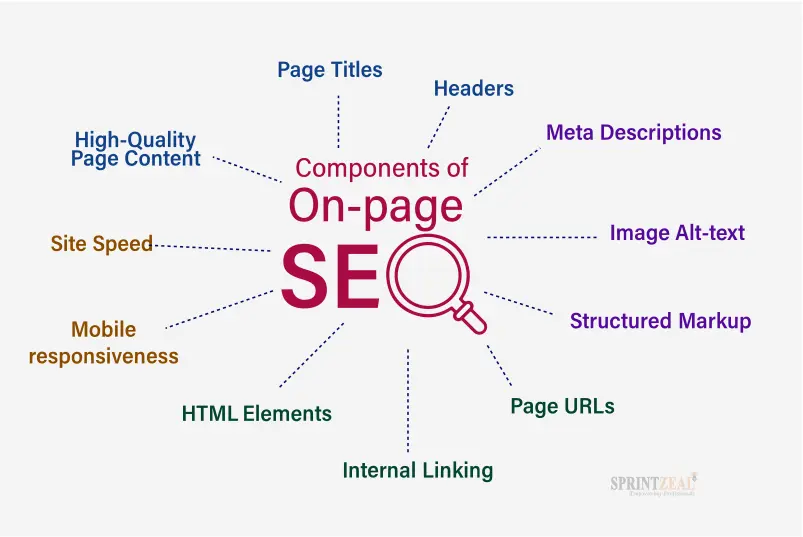
Other On-Page Best Practices
There are a few other things that matter for onsite SEO too.
Optimizing URLs is one of them. Short and clear URLs with keywords make it easier to understand what the page is about. Long or messy URLs can be confusing and harder to type or remember to revisit a page.
Image optimization is another thing. Adding alt text helps describe images and gives search engines more context. Also, large images can slow down your site, so compressing them can help with page speed.
Mobile-friendly design is also very important. A lot of people use their phones to browse now, so websites that work well on mobile usually perform better. If a site is hard to use on a phone, people will probably leave pretty fast.
Keywords still matter, but not if you overdo it. Repeating the same keyword too many times just makes the writing sound weird. It’s better to write naturally and include related words. Search engines are better at understanding meaning, so it doesn’t have to be exact every time.
Conclusion
In conclusion, onsite SEO plays a big role in how a website performs. By focusing on helpful content, clear structure, and a good user experience, it becomes easier for both search engines and people to understand your site. In my opinion, it makes more sense to focus on writing good content first and then optimize it after instead of trying to force keywords everywhere. When you follow these tips, your site has a better chance of ranking well and keeping people on the page.
References
What is On-Page SEO? Key Elements & Best Practices, Search Engine Land (2025) https://searchengineland.com/guide/what-is-on-page-seo
SEO Best Practices: On-Page SEO Checklist, Orbit Media (2026) https://www.orbitmedia.com/blog/seo-best-practices/
On Page SEO Optimization | Definition, Importance and Strategies, GeeksforGeeks https://www.geeksforgeeks.org/techtips/on-page-seo-optimization/
On-Page Optimization Essentials for SEO Success, ClearVoice https://www.clearvoice.com/resources/what-is-on-page-optimization/
What is a Keyword? Definition & How to Use Them for SEO, Techopedia https://www.techopedia.com/definition/1215/keyword-seo
Leave a Reply